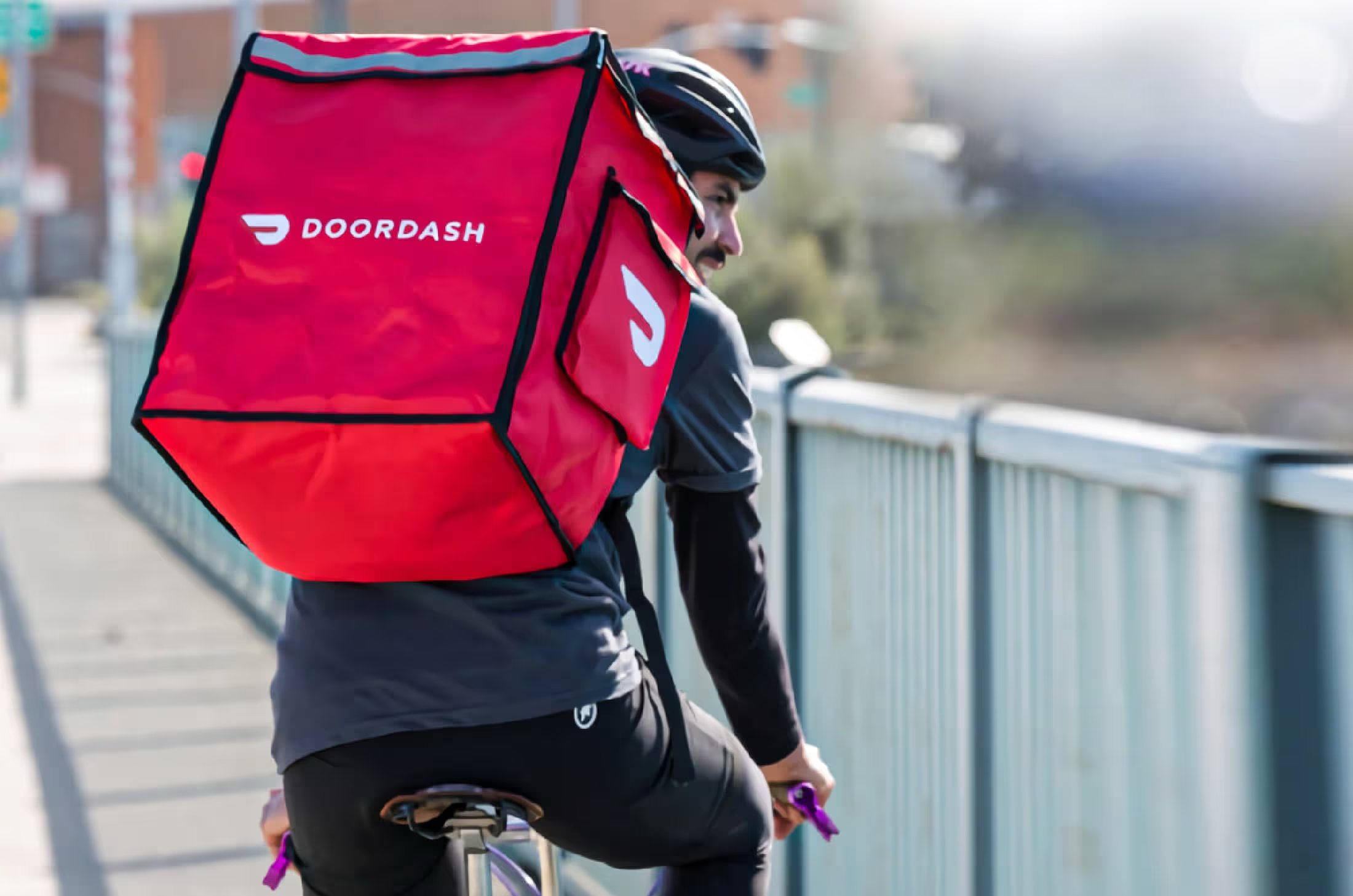
2020 was a huge year for DoorDash.
According to Business of Apps, DoorDash was responsible for 45 percent of all food delivery orders. It increased its revenue by 241 percent that year, from $850 million to $2.9 billion. In early 2021, the company went public with a $72 billion valuation.
It’s no wonder restaurants see DoorDash as a great way to reach new guests. With that much growth, it’s clear that customers use DoorDash to find and order all sorts of cuisines.
But DoorDash (and other third-party food delivery apps) come with one big downside for restaurants: Their fees. DoorDash fees for restaurants can eat way into your bottom line. If only there was a way to get DoorDash delivery — but without all the fees.
There is, but more on that below. First, let’s take a look at the sometimes complicated relationship between restaurants and third-party delivery platforms.
Pros and Cons of Using Third-Party Delivery Apps
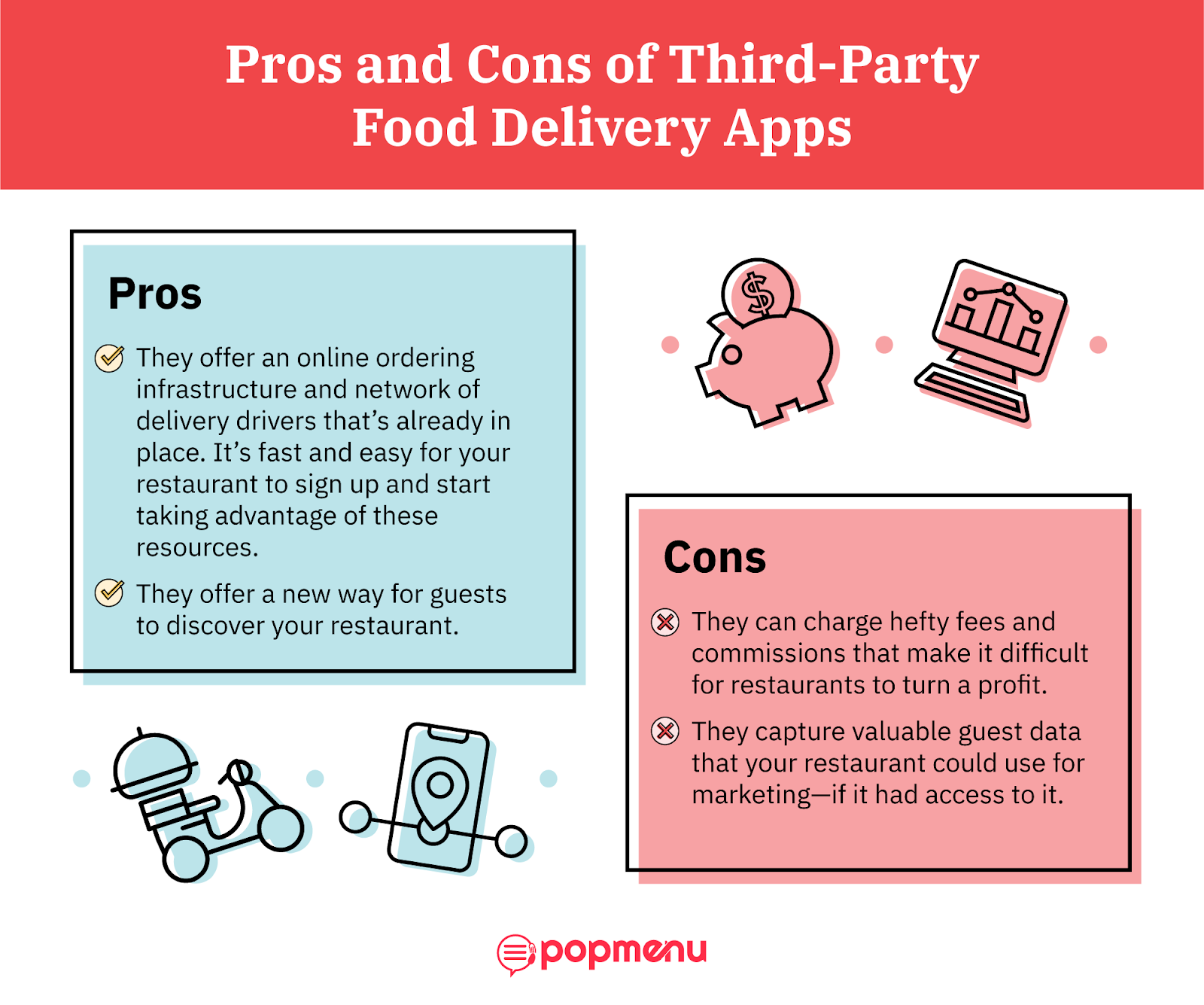
Third-party food delivery apps do have a lot to offer to restaurants.
But third-party apps also come with drawbacks.
DoorDash Fees for Restaurants vs Other Delivery Platforms
How much does it actually cost restaurants to use the most popular delivery apps? It can be hard to tell — some of the apps are less transparent than others about their fees, commissions, and percentages.
DoorDash is one of those platforms that doesn’t disclose its fees openly on its website, but AppInstitute reports that DoorDash fees for restaurants can vary from 10-25 percent, depending on the agreement restaurants sign with the company. Other resources around the internet said DoorDash fees for restaurants can climb as high as 30 percent.
But how does that compare to other third-party delivery platforms?
Grubhub Fees for Restaurants
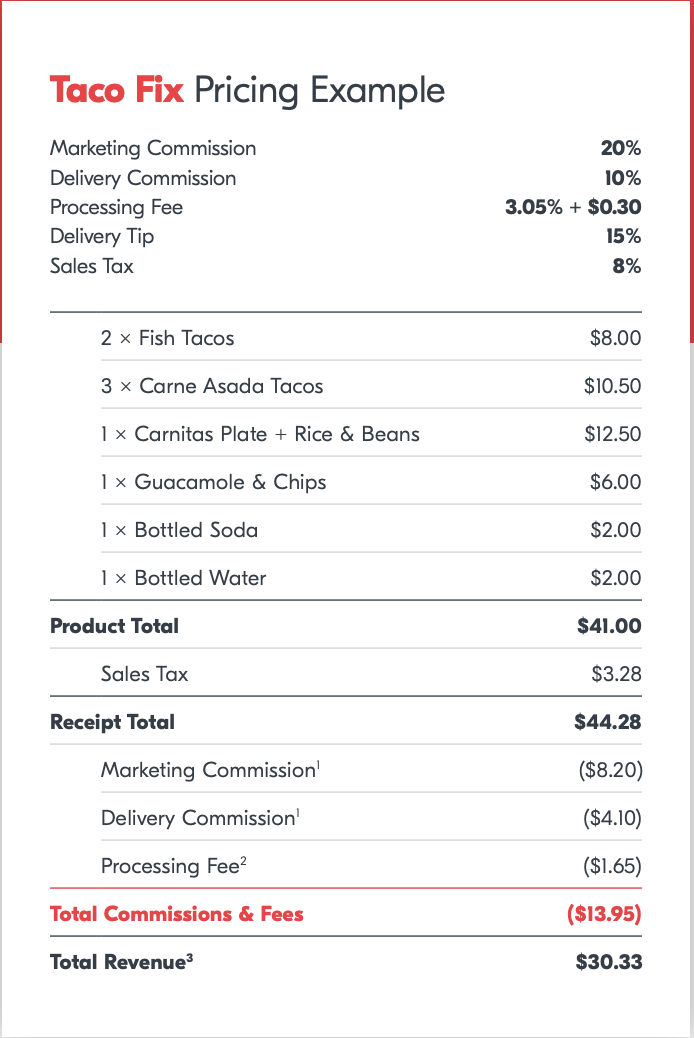
GrubHub is one of the most transparent — it includes a sample pricing breakdown right on its website that shows the various fees it charges restaurants:
-
A 20 percent marketing commission;
-
A 10 percent delivery commission;
-
A processing fee of just over 3 percent.
Those fees mean that, altogether, on a $44 order like the one shown in their pricing example, Grubhub takes a total of $13.95 (or just under 32 percent of the total order cost) in commissions and fees.
Source: https://learn.grubhub.com/wp-content/uploads/2018/08/Grubhub_One-Pager_Pricing-Overview_Final.pdf
UberEats Fees for Restaurants
UberEats charges restaurants a one-time activation fee to join their platform, though they don’t say on their website exactly how much that activation fee is. After a restaurant is listed on the service, reports say that Uber charges them a 30 percent commission on delivery orders, and a 15 percent commission on orders guests pick up themselves. Other sites have anecdotes from restaurant owners who say they were able to negotiate lower commission rates before signing a deal with UberEats.
Postmates Fees for Restaurants
Postmates is another platform that isn’t very transparent on its own website about its fees. But on other sites, restaurant owners have said that Postmates typically charges them between 15-30 percent in commissions, and also requires restaurants to absorb the cost of a direct deposit fee when they withdraw earnings from the app.
Caviar Fees for Restaurants
Since Caviar is a less popular delivery platform, it sometimes offers low commission rates to restaurants as an incentive to join. Its base rates are 12 percent for pickup orders and 30 percent for delivery, but restaurant customers say these rates can actually vary quite a bit.
Seamless Fees for Restaurants
Seamless works a little bit differently than other popular third-party food delivery apps — it uses a “pay to play” model, meaning restaurants that pay higher fees and commissions will get better positions in search results on the Seamless app and website.
Chownow Fees for Restaurants
Chownow also operates differently than some of its competitors — it uses a subscription service model, which means restaurants pay a flat monthly fee without any commissions on orders.
Hidden Costs of Third-Party Delivery Apps
In addition to their base fee structures, third-party delivery platforms have been criticized for additional hidden fees — especially during the COVID-19 pandemic, which has left many restaurants struggling to survive.
Giuseppe Badalamenti, owner of Chicago Pizza Boss, went viral in April of 2020 for sharing a breakdown of the Grubhub financials for his restaurant.
In addition to commissions and fees, the breakdown showed that Grubhub deducted $231 from Badalamenti’s profits for “promotions.” He didn’t specify in his post what that means, but Eater was able to discover that Grubhub’s fine print shows restaurants can opt into app-wide promotions, but then they’re responsible to cover the costs on their own.
How to Get the DoorDash Infrastructure Without the Commission and Fees
Third-party delivery apps are costing restaurants a lot. But in the pandemic age, many of them need delivery orders to survive.
Luckily, there’s a way for restaurants to get DoorDash’s delivery services, but without the commission and fees: Popmenu.
Popmenu is an all-in-one digital toolkit for restaurants, offering all the tools they need to manage their presence and operations online. One of those is an integration with DoorDash that allows restaurants to take orders on their own website and have them delivered by DoorDas’s driver network, without any commissions taken from the cost of the order.
Popmenu has helped restaurants earn more than $23 million in commission-free online ordering revenue. It’s the best of both worlds: You get DoorDash’s existing infrastructure, so you don’t need to add staff or change your workflow to accommodate delivery. And you get to keep all the revenue and valuable guest data.
Popmenu gives you that, as well as a ton of other useful digital tools — including direct online ordering — all for one flat monthly fee. Ready to save money on DoorDash fees for restaurants? Schedule a Popmenu demo today.